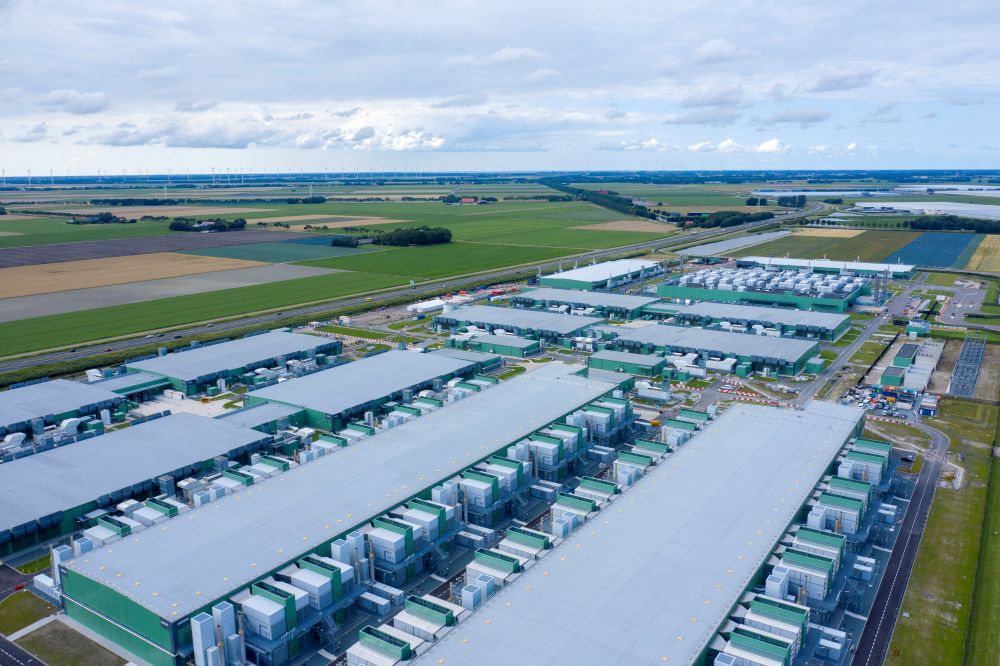
Natural gas is powering data centers in the Permian Basin by providing reliable, on-site electricity through behind-the-meter generation, where locally produced gas fuels dedicated power plants connected directly to data centers. This model helps developers bypass grid congestion, reduce energy delays, and capitalize on abundant, low-cost associated gas. Combined with existing energy infrastructure, available land, and growing AI-driven demand, the Permian Basin is emerging as a major hub for large-scale data center development and energy-intensive computing.
Main Insights:
- The Permian Basin is becoming a leading location for gas-powered data centers due to abundant, affordable natural gas supply.
- Colocated, “behind-the-meter” power models allow developers to bypass grid delays and secure reliable electricity.
- Large-scale projects from Chevron, FO Permian Partners, and others signal long-term interest in gas to compute infrastructure.
- Bedrock provides specialized recruitment solutions to support the shifting workforce demand and new hiring pressures across oil, gas, and power generation.
The rising demand for artificial intelligence (AI) and cloud computing poses a new infrastructure challenge for the US in efficiently powering large-scale data centers that consume significant energy. While traditional hubs such as Northern Virginia face grid congestion and long interconnection timelines, West Texas, particularly the Permian Basin, is surfacing as an alternative. In the Permian Basin, a region long associated with oil production, natural gas is emerging as a promising resource, being directed into a growing network of data center developments.
Why is the Permian Basin attracting data centers?
The Permian Basin, spanning West Texas and southeastern New Mexico, is one of the most productive oil and gas regions in the world. Its appeal for data center developers comes down to a combination of resource depth and logistical advantages:
- Abundant associated gas: Oil production in the Permian generates large volumes of associated natural gas. Due to pipeline constraints, this gas has previously been undervalued or stranded, creating an opportunity for local use.
- Existing energy infrastructure: The region already supports extensive gathering, processing, and midstream systems, reducing the need for entirely new buildouts.
- Available land and scale: Compared to congested urban data center markets, the Permian offers large tracts of land suitable for multi-gigawatt campuses.
- Fiber connectivity: Established fiber routes along transport corridors allow for integration into national and global data networks.
All these factors create an environment where power generation and computing can be developed side by side, instead of depending on distant grid capacity.
Why Data Centers Are Turning to Local Gas Supply
Modern data centers, particularly those supporting AI workloads, require uninterrupted, high-density power. Intermittent sources such as wind and solar contribute to the energy in Texas, yet they struggle to consistently meet the round-the-clock nature of large-scale compute without significant storage capacity.
Natural gas provides a more stable alternative.
Gas-fired generation delivers consistent baseload power, making it apt for facilities where downtime isn’t acceptable. In the Permian, this advantage is amplified by proximity. Instead of transporting gas across state lines, developers are increasingly building power generation directly at or near the source.
According to Enverus, nearly 40GW of data projects across the US are planning to generate their own electricity, with natural gas playing a central role in distributed, on-site systems.
Understanding the Behind-the-Meter Model
One of the defining features of this trend is the use of “behind-the-meter” power generation. This model differs from traditional setups where electricity is purchased from the grid.
In this configuration:
- Natural gas is captured and processed near the wellhead,
- The processed gas is fed directly to an on-site power plant,
- And the electricity is generated and consumed on the same site, without passing through public transmission networks.
With this model, projects don’t have to wait years for grid interconnection. Operators get more predictable energy costs and a steadier supply. And because the power never travels across public lines, some of the usual transmission and distribution charges don’t apply.
Mercer Capital notes that this kind of colocation lets operators turn what used to be excess or stranded gas into a dependable power source for computing, basically flipping a logistical problem into a revenue‑generating asset.
The Top Natural Gas and Data Center Projects in the Permian Basin
The level of investment in the Permian Basin reflects growing confidence in this model. Here are some high-profile projects that show just how quickly the sector is expanding:
Chevron’s power and data strategy
Chevron has announced plans for a 2.5GW natural gas-fired power facility in the Permian, built specifically to feed a colocated data center. The company has already floated the possibility of doubling the project to 5GW, with initial operations targeted for around 2027. This marks a notable shift as major oil and gas companies move directly into data infrastructure.
FO Permian Partners development
FO Permian Partners is developing more than 5GW of off-grid gas-powered capacity for data centers, starting with a 150MW phase in Midland County. The project sits on a large landholding with direct access to natural gas supply, allowing for phased expansion.
Pacifico Energy’s ranch project
A proposed development in Pecos County could generate up to 7.65GW of electricity, making it one of the largest power projects in the US.
Fermi America’s project Matador
Fermi America has secured a long-term natural gas supply agreement of approximately 300,000MMBtu per day to support an initial 2GW of capacity, with ambitions for a much larger buildout.
Together, these projects indicate that the Permian Basin is transitioning from a hydrocarbon production center into a hybrid energy and technology corridor.
The Economics of Associated Gas
Another factor behind the region’s development is the economics of associated gas. For years, the Permian has faced persistent pipeline constraints, especially around hubs like Waha, which have created price swings and limited options for moving gas out of the basin. But instead of treating this as a structural limitation, operators are finding ways to monetize gas locally.
Data centers have steady, high-volume energy needs that create a reliable outlet close to production lines, and long-term supply agreements give producers a level of revenue predictability that wasn’t always available in the past. Because much of the power generation can be built directly on-site, companies can avoid the cost and delays of major infrastructure expansions. In effect, gas that once carried minimal value is being redirected into nearby data center facilities, where it becomes a premium energy input for high-performance workloads.
Water and Land Considerations
Power is only one part of the equation when it comes to data centers, they also require extensive cooling, land access, and connectivity. On these fronts, the Permian Basin has various advantages.
The region’s extensive water‑handling networks, originally built to support oil production, are increasingly being repurposed for industrial cooling, including systems that can reuse produced water. The large, uninterrupted land parcels common in the basin also make it far easier to assemble development sites and plan for long‑term expansion. And because major transport corridors and fiber routes already cut across the area, developers can move from early planning to actual deployment without the usual delays that come with building out new infrastructure from scratch.
According to the Baker Institute, this combination of energy, water, and foundational infrastructure gives the region a unique ability to support large‑scale data center projects.
Challenges and Constraints
Despite the strong momentum behind these projects, a few hurdles still shape how quickly development can move:
- Regulatory scrutiny: large gas-fired facilities still need air permits and environmental review, which can affect overall timelines.
- Infrastructure coordination: even with behind-the-meter power, projects have to be carefully integrated with pipelines, processing capacity, and midstream schedules.
- Market uncertainty: long‑term viability ultimately depends on how fast AI and cloud demand grows, and how stable that demand proves to be over time.
Even so, the volume of announced projects suggests that companies are prepared to work through the complexity in exchange for faster buildout and more predictable energy supply.
How does this growth affect the workforce?
The expansion of gas-powered data centers in the Permian Basin is beginning to influence workforce demand across multiple sectors. This isn’t limited to construction phases, but also includes ongoing demand for operational and technical expertise.
Specialists in gas and power systems - engineers, operators, and technicians - are becoming increasingly valuable as more colocated generation comes online. Data center operations themselves require a blend of electrical, mechanical, and controls knowledge, creating hybrid roles that bridge between traditional energy roles and digital infrastructure. Large projects, often located far from major population areas, also put pressure on local labor pools and require fast mobilization of skilled workers. Many developments lean on phased or modular construction, which only increases the demand for contract and project‑based hiring.
For companies operating in the Permian, securing skilled labor is becoming as important as securing fuel supply. The competition for experienced professionals in natural gas operations, power generation, and infrastructure delivery is likely to intensify as more projects move from planning to construction.
Bedrock: Your Partner for Workforce Solutions in the Permian Basin
As large-scale gas-powered data centers progress across the Permian Basin, companies need a workforce partner that actually understands the region and can mobilize specialized talent quickly. Bedrock brings decades of experience delivering workforce solutions in the Permian Basin, supporting operators through major CAPEX and OPEX programs across West Texas and New Mexico, from exploration and production to facility construction, pipeline expansion, and complex power‑generation environments.
Our recruiters, compliance specialists, and contractor‑management teams focus on providing fully vetted, technically capable professionals who can step into projects and contribute immediately. If you’re expanding operations or preparing new development in the Permian, contact us today to secure the workforce you need.
People also ask:
Why are developers choosing the Permian Basin for colocated, gas‑powered data centers?
The region offers abundant associated gas, existing midstream infrastructure, large land availability, and the ability to build behind‑the‑meter power systems that avoid grid delays.
How will gas-powered data centers impact talent availability in the Permian Basin?
They will intensify competition for skilled technical labor, especially in power generation, mechanical/electrical systems, and operations roles that support continuous-run facilities.
What are the most in-demand roles for energy and data center projects?
High-priority roles include drilling and completions engineers, power plant technicians, controls specialists, HSE professionals, project management, and specialists with experience in both traditional energy and high-density electrical systems.
How does Bedrock support recruitment and workforce solutions for Permian Basin projects?
Bedrock delivers specialized recruitment solutions tailored to the Permian Basin, providing vetted engineers, operators, and contractors for a range of energy-intensive projects.
Can Bedrock help with large‑scale contractor mobilization?
Yes. Bedrock manages sourcing, onboarding, payroll, compliance, and logistics for large contractor workforces, ensuring projects stay staffed, safe, and compliant from start to finish.