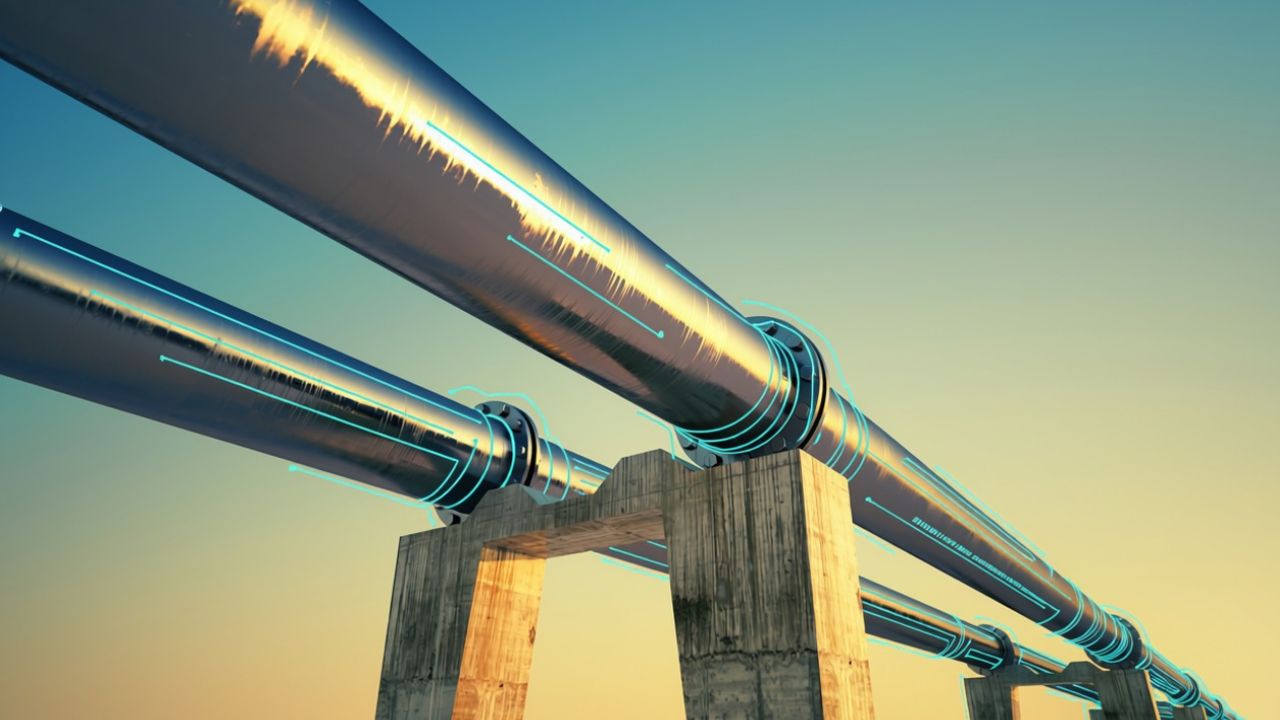
Digital twin technology builds a live virtual copy of a physical asset and feeds it with sensor data, so engineers can watch how the asset behaves, test decisions on the model first and catch problems early. For pipelines, the appeal is spotting a developing fault before it becomes an outage. Operators in oil and gas are adopting it for integrity management, leak detection and maintenance planning, and the people who can build and run these systems are hard to find.
Main insights:
- A digital twin combines live sensor data, inspection history and analytics into one working model of a pipeline.
- Half of oil & gas and chemicals companies are already implementing digital twins, according to EY’s 2025 Future of Energy Survey.
- Applications run from integrity management through to scenario modeling.
- Results depend heavily on people who understand both pipelines and data.
- Specialist contract recruitment gives operators a faster route to those people.
What is Digital Twin Technology?
Digital twin technology is a way of keeping a virtual model of an asset continuously in step with the real one through a two-way flow of data. It differs from a standard simulation, which runs on assumptions fixed on the day it was built. A twin changes as the pipeline ages, wears and responds to different operating conditions. Most pipeline twins pair hydraulic models, which describe how pressure and flow should behave, with machine learning that learns what normal looks like for that particular line. The model can also estimate conditions along stretches of pipe that have no instruments installed.
Digital Twins in Pipeline Operations
Digital twin technology applications in pipelines span the entire asset lifecycle, from design and construction through to decades of operation. The best way to understand the technology applications is to look at the jobs pipeline teams already do every day.
Pipeline integrity management
Integrity engineers have traditionally worked from periodic inspections, such as in-line tool runs and direct assessments, with long gaps between each data point. A digital twin brings inspection results, wall thickness readings, corrosion rates and operating pressures into one model. Each new inspection refines the model, and the model in turn helps engineers decide where to dig, repair or reinspect. The effort goes to the segments that carry the most risk instead of being spread evenly across the line.
Real-time leak detection
A twin that receives live pressure and flow readings has an expected picture of how the line should behave. When readings drift away from that picture, the system can flag the change for a controller to review. Small deviations can be caught earlier than a manual patrol would find them, and the line can stay in service while the team investigates.
Predictive maintenance
Compressor stations and valves generate vibration and temperature data every minute they run. A twin turns that stream into a view of wear, so repairs can be booked before a component fails. GlobalData lists predictive maintenance, remote monitoring, and autonomous operations among the main ways oil and gas companies are deploying twins.
Remote monitoring
Many pipeline assets cross long stretches of open country, such as the Permian Basin or the Gulf Coast, and every inspection trip costs time. A twin gives control room and integrity teams a clearer view of asset conditions between field inspections, helping them prioritize site visits where intervention is most likely to be needed.
Scenario modeling
Before changing throughput or planning for a severe weather event, an operator can try the change on the virtual pipeline. Twins can be used to model changes in throughput, maintenance schedules, operating conditions and emergency response scenarios before decisions are implemented in the field. A mistake made on the model costs nothing and puts nobody at risk.
The Benefits for Pipeline Operators
The most obvious gain is reliability and uptime. Operators that spot a developing fault early can schedule a repair on their own terms, which protects uptime and keeps product moving to customers. Maintenance spending also becomes more targeted. Instead of replacing parts on a fixed calendar or waiting for failures, teams service equipment when the data says it needs attention.
Decision-making speeds up too. When integrity, operations, and planning teams look at the same live model, they can see the whole picture on one screen instead of waiting for three separate reports. A question that once needed a week of analysis can often be answered in an afternoon.
Regulatory compliance is another benefit of using digital twins in pipeline operations. In January 2025, PHMSA issued a final rule on gas pipeline leak detection and repair that requires operators to build advanced leak detection programs aimed at finding and repairing gas leaks. Requirements of this kind can change as federal policy develops, so operators should confirm the current status with PHMSA. Regulators expect better detection, better records and faster repair. A twin that logs conditions continuously gives compliance teams the audit trail they need without a manual scramble for every review.
Sustainability and emissions reductions are one of the remaining benefits. The same PHMSA rulemaking was presented by the Department of Transportation as an update to methane emissions detection requirements for gas pipelines. Catching small leaks early keeps methane out of the atmosphere, and optimizing compressor operation can cut fuel use. These are the practical answers to the question of how digital twins contribute to sustainability in oil and gas. Our recent piece on carbon capture trends in the US covers how similar monitoring needs are showing up in the CCUS pipeline networks now being built.
What Skills Are Needed to Support Digital Twin Technology in the Oil & Gas Industry?
Data scientists, engineers with domain expertise, industry 4.0 practitioners, and software developers are the people on whom digital twin success depends, whether they’re employed directly or brought in as consultants or contingent workers. In pipeline operations, that translates into the following roles:
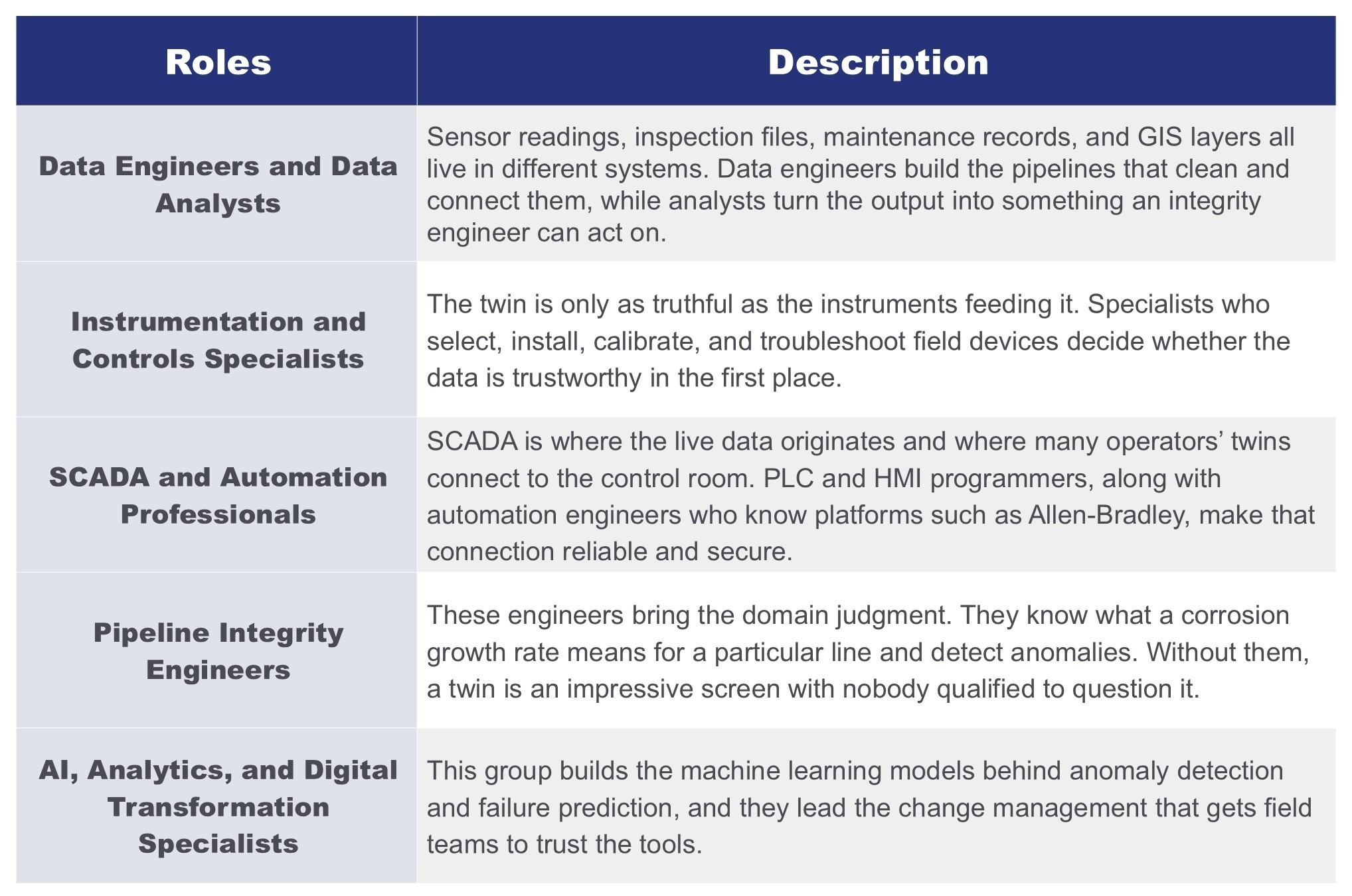
If you’re searching for pipeline industry jobs, this is a useful picture of where the hiring is heading. Traditional trades are still in demand, but the roles that connect operations to data are opening up in the same companies.
The Recruitment Challenge Facing the Pipeline Industry
Operators looking for these people aren’t the only ones. Technology firms, utilities, renewables developers and large infrastructure contractors all want data engineers, automation specialists and analysts. Many of those employers offer remote work and pay structures that a pipeline company might find hard to match. A data scientist with an offer from a software company has little reason to move to a midstream operator without a compelling project and a clear path.
Skills gaps inside the industry are also well documented. In EY’s Future of Energy Survey 2025 of technology and workforce readiness in oil & gas and chemicals, EY found that while 87% of executives viewed their ability to reskill employees as a competitive advantage, fewer than one-third were actively retraining their workforce. The survey also highlighted widespread workforce and adoption challenges, with 84% of respondents reporting difficulties hiring or retaining workers capable of using new technologies, and 85% struggling to scale successful digital initiatives beyond individual use cases. As digital twins become more sophisticated and increasingly integrated into pipeline operations, these findings suggest that securing the right mix of technical, analytical, and operational expertise is just as important as the technology itself.
Upskilling existing teams is part of the answer, and many operators are already providing data training to integrity engineers and controls technicians. It takes time, though, and a twin project often can’t wait for a training cycle to finish. There’s also a balance to strike. A pipeline team that hires only digital talent risks losing the field knowledge that keeps twins honest, while a team that leans only on veterans may struggle to build the model. The strongest teams pair people who understand steel, pressure and product with people who understand data, then give them room to learn from each other.
How Specialized Recruitment Supports Digital Transformation
Digital twin projects don’t fit neatly into one job title. They need multidisciplinary teams, with integrity, controls, data, and analytics working to the same plan. Assembling that group through general job boards can be slow, and the candidates who fit the brief are usually already employed.
A recruitment partner that works inside the oil and gas industry knows how to find them. The most valuable candidates are often the ones with experience on both sides, such as a SCADA engineer who has also built analytics dashboards, or an integrity engineer who has worked with inspection data platforms. They rarely describe themselves that way on a resume, so spotting them takes a recruiter who understands the work well enough to ask the right questions.
Bedrock has been supplying contract support to US upstream and midstream operators since 2011, and as part of a wider network, we hold more than 250 MSAs with operators and service companies. Our teams cover key operating regions, including Houston and the Permian Basin, so we can look for talent where your assets are.
Partner with Bedrock Today
If you’re planning a digital twin project, expanding a controls or analytics team, or looking for hybrid candidates who understand both pipelines and data, get in touch with our team. Or if you’re a professional ready to take on your next role, browse our current vacancies and see where your skills fit.